Saturday, January 25, 2014

"Whiskey Women" - the untold story of how Fred Minnick became the new voice of whiskey for a generation.

"Whiskey Women: The Untold Story of How Women Saved Bourbon, Scotch, and Irish Whiskey" is so important that
I own(ed) 3 copies of it.  I have carried it around with me for months, inhabiting it.  I have consumed a pre-release publisher's timed self destructing electronic edition (based on my Amazon reviewer status), a signed hard cover (destroyed in an accident), and finished with a kindle edition.  I consider it an important book - the kind that can change your view of the world.  Or at least of the whisky world - and, in my view, that counts for a lot.  The particular view that "Whiskey Women" undoes is the notion that whiskey is a man's drink and that, after that fact, it's OK for women to like it too.  The "it's OK, honey, I'll scoot over for you and make room for you on this bench on the whiskey express" notion that is embodied in such facts as whiskey marketing people developing extremely light whiskies to be marketed to women and developing flavored whiskies specifically to appeal to the women's market.  For example:

"Though industry officials don’t like to talk about it, it’s no secret that one initial aim of the [flavored whiskey] bottlings was to bring women into the whiskey fold. “I do think it’s a major effort to go after female drinkers in an aggressive way,” Mr. [Dave] Pickerell said."

http://www.nytimes.com/2013/06/26/dining/flavored-whiskeys-expand-the-market.htm
This point of view is nothing new.  In fact it is very old and well nigh universal - but it doesn't square with a reality where women invented and were the ones to practice the art of brewing beer in the earliest eras of civilization and where women invented the art of distillation and where women were the first and traditional practitioners of the art.  Whiskey was born as a home made agricultural product as an outgrowth of the kitchen, and as a medicine that emerged as part of a woman-centered tradition of folk healing.  Fred Minnick documents all of this in Whiskey Women in a careful and authoritative way.  He does so in a way that isn't all that common in whiskey books.  Minnick takes us back to ancient source materials, Sumerian cuneiform tablets, medieval illuminated manuscripts, and a host of other source materials in a mature approach that melds scholarship with journalism.

But, as Minnick takes pains to show, this feminine locus of domestic whisky production was a dual edged sword in the culture wars that raged around whiskey in its initial rise from locally produced agricultural product to highly political source of tax revenue and then focus of industrial revolution mechanization and economies of scale.  In this era women distillers were demonized, hunted, exploited, and ultimately displaced.  Women making whiskey as part of traditional folk healing became connected with witchcraft and women distillers were burned at the stake as witches.  In the American culture that followed in the 19th century whiskey become intimately connected with prostitution and gambling and addiction.  It was a culture that produced strife and the women-led temperance movement which gave rise to Prohibition.  This movement portrayed whiskey as part of a complex of sinful anti-family activity on the part of men that included the image of whiskey bearing women as temptresses.  This created the great trope of women in bars as lures to a dissipated and destructive path.  This ultimately resulted in general banning of women from working in bars in many parts of the country for decades in the period from  Repeal to the 1950s and 60s.

Prohibition was a time of organized bootlegging and here women, once again, played a major role.  Minnick is on solid ground here with the fantastic stories of lady bootleggers, both high and low such as Gertrude, "Cleo" Lythgoe, "The Queen of the Bootleggers".   This stuff is fun.  The next historical moment is the movement for Repeal which was also led by a woman, Pauline Sabin.  And then the rise of single malt Scotch, greatly influenced by the woman who owned and ran Laphroaig, Bessie Williamson.  Bourbon's resurgence is connected with a number of fascinating women, as is the current global explosion of whiskey popularity.  We meet women master blenders, executives, brand creators, taste makers, and owners.  This cast of characters will be familiar to many whiskey enthusiasts.  There's plenty of #WhiskyFabric here.

And so we end up in the current day and into the ironic situation where women are becoming leaders of the whiskey world and the bar and cocktail scene and it's presented as though it is a "new thing".  Fred Minnick shows us this couldn't be further from the truth.  We have it backwards.  Women gave whiskey to the world and men took it from them, soiled it with big money, bloodshed, vice and greed and painted it as the very juice of the "Y" chromosome.  This is a fictional recasting of what whiskey actually is - something originally made in a kitchen that is part of the attributes of hospitality, medical and emotional care, and social interaction and there is nothing inherently male about any of it.  Get inside this idea and you'll understand why the Women In Academia Report listed this book on of the "Recent Books That May Be of Interest to Women Scholars" page.  "Whiskey Women" will change the nature of scholarship on the subject and I cannot see how it will not ultimately change the modern view of whisky's history and how it is told in the future.

(update...)  I recently wrote a post about how women are represented in American whiskey advertising and quoted heavily from "Whiskey Women".  You can see how Minnick's content inspired a whole thesis:
http://www.cooperedtot.com/2014/05/women-in-american-whiskey-advertising.html 

You have to understand that Fred Minnick wears an ascot, loves his bourbon, and has been to war. 

Fred Minnick isn't just a whiskey blogger, although he most definitely is one of those, and an important one - check out:
http://fredminnick.com/blog/
It's that Fred is also a professional journalist with a rapidly growing stature in the whiskey (and wider world).  He is a frequent contributor to Whiskey Advocate magazine:
http://whiskyadvocate.com/whisky/tag/fred-minnick/
He is the author of the Iraq war memoir Camera Boy.
http://www.amazon.com/Camera-Boy-Army-Journalists-Iraq/dp/1555716687
And, as a journalist, he writes regularly on a wide variety of topics for a wide variety of audiences.  But, significantly, he is commonly presenting aspect of the Bourbon world to the wider world, such as these articles in Scientific American:
http://www.scientificamerican.com/author/fred-minnick/
My point here is that Fred is more than just a guy who loves his bourbon, has been to war serving his country, and who wears an ascot.  He's also fast becoming one of the most important voices in America on the topic of America's whiskey.  I recommend you start keeping track of him, if you don't already.


FYI - if you want to read reviews of this book written by women whisky bloggers (and I recommend you do) check out the following:

Alwynn Gwilt's excellent review of this title:
http://misswhisky.com/2014/01/13/book-review-whiskey-women/

Johanne McInnis' interview with Fred - placing the book in a wider context:
http://whiskylassie.blogspot.com/2013/12/writer-circle-profile-fed-minnick-no.html

Susannah Skiver Barton's thoughtful and hard hitting review:
http://whattastesgood.net/2013/10/29/a-whisky-woman-on-whiskey-women/


Wednesday, January 15, 2014

Suntory becomes a caretaker of American Bourbon traditions. And that's OK.

High end Suntory whiskies glitter like the jewels they are.  Yamazaki 25 is the second from left.
Look at the color  of it:  all natural - and yet supernatural
The news that Suntory purchased Beam International for $13.6 billion has provoked a host of reactions - some of them racist and negative.  It's not surprising in a way.  There are few products more iconically American than Bourbon and the number one rye mash Bourbon is Jim Beam and the number one wheater is Maker's Mark.  And Japan bombed Pearl Harbor... as I remember every December 7th.  Here are a few of the thousands of comments floating around social media and the comments sections of the news articles all over the Internet to illustrate what I'm talking about:

"Another American iconic brand sold to a foreign company ... 
You will never get another cent from me .. 
Go count your yen and choke on it..."

"You sold heritage to a bunch of japanese businessmen. Sell outs! Sure, it might taste the same but it's not and ya know it. You just sold out a kentucky tradition to another country."

" I don't own a Japanese car I will not drink a Japanese bourbon. I would drink saki if I wanted a Japanese drink"

"SELL OUT... Continue to brew your whiskey, I for one will not buy 'Japanese Whiskey'"

Do all of these people understand that Bourbon, by law, must be made in the USA and thus every single drop of Bourbon is American?  Do they understand that Beam's management team, not to mention all the distillery jobs, aren't going anywhere?  That no one is changing the mash bills or recipes or the flavors of the iconic Beam Bourbon brands?  That other major Bourbon distilleries are already foreign owned?  Who knows?  It's an emotional "gut" sort of thing with some people.

But there is an irony here.  Japan is a major savior of Bourbon.  When Americans had forgotten it in the 1980s and Bourbon distilleries were going bust, Japan fell in love with mature Bourbons and began sucking out the aging glut stocks.  And that helped teach the world that Bourbon wasn't just an old American's uncreative fallback drink but was a legitimate epicurean product worthy of notice and demand.  Japanese whisky epicures became obsessed with Bourbon and it's a true love that helped resurrect a dying Bourbon industry.  To support that I'll quote Michael Veach, Bourbon historian for the Filson Historical Society who wrote, in his 2013 book "Kentucky Bourbon Whiskey: An American Heritage":

"The Japanese economy, which had grown at an outstanding rate in the 1960s and 1970s and continued to do so in the 1980s, also paved the way for bourbon’s comeback. Along with such best-selling brands as Early Times, Four Roses, Maker’s Mark , and Jim Beam, Blanton’s caught on in the Japanese market, selling for a very high price, and making Age International a nice profit. But the favorite was I. W. Harper. It sold so well that Schenley pulled it from the American market in order to circumvent its profits being funneled off by the gray market—"

Why?  Veach gives a very revealing and coherent explanation for that as well:

"Just as Scotch whiskey went global by following the armed forces of Britain to every corner of its empire, so too bourbon whiskey followed the U.S. military to its bases in South Korea , Japan, Germany, and Italy. Initially available only through base exchanges, bourbon was soon among the standard offerings of local bars catering to servicemen, giving the locals a chance to develop a taste for it as well."

Veach, Michael R. (2013-03-01). Kentucky Bourbon Whiskey: An American Heritage (Kindle Locations 1185-1188). The University Press of Kentucky. Kindle Edition.

To return to the irony of the "patriotic reaction", there is also the fact that Japanese whisky companies are already deeply involved in the Bourbon business - from Kirin's ownership of Four Roses to Age International being owned by Takara Shuzo Ltd.  (That's the company that flipped what became Buffalo Trace at the turn of the current century, but kept ownership of the Buffalo Trace Mashbill #2 brands like Rock Hill Farms).  Japan's involvement with Bourbon is nothing new - but somehow, with Jim Beam and in the current cultural mania over Bourbon it's different this time.

Or is it?  Of course Beam International isn't just Jim Beam Bourbon, it's a multinational conglomerate with distilleries and products around the world - and that's true for Suntory as well.  Suntory owns Morrison Bowmore and their moves there, such as making Rachel Barrie master blender and giving her tremendous freedom to be creative have resulted in some stunning whiskies and a some major turnarounds.  As far as patriotism goes, generally speaking, major multinational corporations are multi-national.  If you buy a Ford made in Mexico is it a more patriotic act than buying a Toyota made in Tennessee?  The idea that "the dollars stay here" is simply out of touch with the reality of the global economy.  The real issues are functional:  will it serve the whisky?

That's why, on Chuck Cowdery's excellent blog post about this sale, there is a comment that got to the root of it for me:

"Soonami said...
Will acquisition by a private company ultimately be beneficial to the brand from an enthusiast perspective? Will it be good for us like Kirin ownership of 4 Roses? Or will it be more like Campari, literally watering down Wild Turkey?"
http://chuckcowdery.blogspot.com/2014/01/its-suntory-time-for-beam-inc.html

I answered by equivocating - talking about how Suntory sticks to its guns and many of their expressions are just sold out a lot of the time and they aren't building new distilleries.  But I also noted that they are lowering the proof of Hakushu Heavily Peated for imports to the US (starting this year) to 43% abv. from the 46% abv. it's sold at in Europe.  But I had an experience in the Spring of this last year that really taught me something about Suntory.  It's something that gives me comfort and should give you some too if you have concerns about this deal.  What I saw was an obsession with quality and with the production of some of the worlds greatest whiskies.  The experience was an event: Suntory's 90th Anniversary celebration.  If you want to know about that astounding event, I'll refer you to the excellent work of several other whisky bloggers who were there and who all wrote up great posts about the event (links at bottom).  I wasn't blogging at the time, so I didn't.  There was something about that event that was really special.  Not just because it was the most astoundingly slick and beautiful whisky event I have ever attended or even ever heard of (because that is about the event - and not the whisky) - but because the whisky they were pouring was extraordinary and really astounded me.

Hiroyoshi (Mike) Miyamoto - former Master Distiller and General Manager of Suntory leads 
the first tasting.  His final selection, served to hundreds of people: the rare and 
stratospherically expensive Hakushu 25.
I'm not here to write up the event 6 months too late.  I'm here to tell the story of the whiskies they poured.  You see, I took samples - and I did follow up tastings (actually with a number of people including Peter Silver and Steven Zeller - The Smoky Beast.  And the whiskies that they served on the main bar (depicted in the photograph at the top of this post) rocked my world.  From left to right they were Yamazaki 18, Yamakai 25, Hakushu 18, Hakushu 25, Hibiki 17, and Hibiki 21.

I'm going to brief (ha ha).  Here are tasting notes for just a few of the highlights (Suntory's entire line of single malts was poured that night and I had them all - but will limit tasting notes to my top 3) and a a conclusion to wrap this all up.

In the glass.  Left to right: Hibiki 21, Hakushu 25, and Yamazaki 25. 

Hibiki 21 43% abv.

FYI - Hibiki is complex blend of Hakushu and Yamazaki malts and Chita grain (which is just wonderful - a butterscotch bomb).  As a blend there are a wide variety of malt, grain and wood influences which include American oak, Spanish oak, Japanese oak, and Japanese plum wine cask.

Color: rich gold

Nose: achingly lovely orchid florals, honey, bee's wax,

Palate opening is sweet and richly floral with plum blossom, and melon.  The mid palate is rich with honey, malt, bananas and butterscotch (which I recognize from the Chita grain).  The turn to the finish adds the complexities of mineral, forest, and a kiss of iodine and distant smoke.  A delicious whisky that takes sweetness close to the line, but stays dry enough and complex enough to be an absolute stunner.

*****

Hakushu 25 43% abv.


Neyah White, Suntory West Coast BA,
pours for grateful people including,  G-LO.  Center.
Color pale gold

Nose: big waxy estery fruity florals.  Orchids, magnolia, and ambergris.  Underneath there are complicating notes of mineral, forest oak leaves, and iodine.  There are distant notes of high grade leather and whiff of smoke.

Palate:  sweet, complexly floral in a tropical jasmine and magnolia vein, malty buttery, waxy and brilliant on the opening.  It just gets better on the mid palate as tropical fruits (quince, mangosteen, gogi, pineapple, and apple) emerge and dance with the complexity of mineral dust, oak tannins and smoke.  The turn to the finish is lovely as the elements turn toward oak and roasted seeds.  The finish is long, fruity, malty, oaken, and still, somehow, floral to the very end.

Complex, and richly intense, but what's special is how it melds light and dark aspects of the uniquely Japanese unsherried flavor profile.

*****

Would have been the dram of the night except for...

Yamazaki 25 43% abv.

Color: an astonishing scarlet dark reddish amber with mauve, almost purple glints.  I'm sorry to go on about the color but it is outstanding.

Nose: really big and involving evolving progression of dried roses, raisins, plum and berry jam, old oak, red fruits, rosemary herbals, and sandalwood incense.  

The palate, even at 43%, luxuriates in a syrupy thick mouth feel with mouth filling flavors of rose floral and chocolate covered raspberry sweetness expanding into elegant rancio, toffee, sherry, dried fruits (fig loaf, black raisins) and pipe tobacco. The finish is extremely long with dried figgy fruits, pannatone, and old money fancy oak furniture.
An incredible dram.  Truly memorable.  I wish I could even think about affording a bottle.  Definitely one of my fantasies.

*****

Conclusion:  Suntory is a company that is obsessed about quality whisky and has a deep and abiding love for whisky.  Having tasted their top expressions (which have won pretty much every award in sight, by the way) has convinced me that something special is in the DNA of that company.  A company that can make whiskies like this as OBs (Original Distillery Bottlings) is clearly deeply into the topic of what makes a whisky great.  All in all, I'm sure Beam International is in fine hands.  Here's to hoping that they consider bringing some of this magic to Beam's Bourbon line up.

Linked image of some whisky bloggers at the Suntory 90th in LIC
from The Whisky Woman Blog
Links to proper blog posts about the event:

G-LO and Limpd's write up on It's Just The Booze Dancing - with excellent photographs:
http://boozedancing.wordpress.com/2013/05/24/event-review-suntorys-the-art-of-japanese-whisky-long-island-city/

Stephen of the Malt Imposters uncharacteristically un-tongue-in-cheek and non-hallucinatory version - a very thorough and lucid bit of journalism:
http://www.maltimpostor.com/2013/05/suntory-art-of-japanese-whisky-event-in.html

Allison Patel's perceptive and beautiful post on The Whisky Woman blog: http://thewhiskywoman.wordpress.com/2013/06/13/suntorys-art-of-japanese-event-nyc/
Some weirdos from Malt Imposter and Booze Dancing... 
Update:  I just noticed that Sku said much of what I've said - but more succinctly and clearly written - on Sku's Recent Eats:  http://recenteats.blogspot.com/2014/01/bourbon-bigotry-suntorybeam-deal-brings.html

Saturday, December 28, 2013

Sorel and Brenne: an Odd and Compelling Synchronicity

Sorel & Brenne together.
Photo: courtesy of Jackie Summers
I'm not really a cocktail guy.  The concoctions I spend time and energy optimizing are pure whisky plays:  the Old Fashioned and the Manhattan.  I want to taste the whisky.  Indeed, the only cocktail I've ever blogged here was a banana infused bourbon Old Fashioned.  But there are plenty of other things to do with whisky. For me, it's often about pairing.  Sorel and Brenne is far simpler a drink than even the basic Old Fashioned.  It isn't really a cocktail at all.  It's a pairing.  2/3 Brenne to 1/3 Sorel.  And it's genius.  I first had it at a party celebrating Brenne's first anniversary as a brand last autumn at the West Village bar "Bell Book And Candle".  Allison Patel, Brenne's creator, had invited friends and people who helped get Brenne off the ground to have a birthday cake and some drinks.  I was honored to be on her list.  It was a stellar party.  There I met Jackie Summers, the creator of Sorel. I already had a bottle of Sorel and had been following @jackfrombkln on Twitter.  I was excited to meet him because I knew how much Allison liked him, but I wasn't prepared for how heartfelt, genuine, warm and sweet he is.   He's not just a nice guy, as it turns out, but someone aggresively on the path of wisdom about life (read on).  Someone mentioned the pairing of Brenne and Sorel and I tried it and played with it a bit and I really enjoyed it.  I had been looking for an application for that bottle of Sorel.

From Right: Sorel, Brenne, and the pairing, which is called "The Last Call".
Brenne: (I'm drinking the ethereal and apricot-banana floral cask 257 today - and it makes sense to pay attention to cask number as the variations are fascinating) is delicate, estery fruity floral pretty thing - soft and easy with silky mouth filling lignans from new French oak.  It comes off as sweet, but not from actual sugars, but solely the cues of esters and lignans.  It's so creamy.   Sorel (which Jackie Summers, it's creator, pronounces "sew-REHL" like it was a girl's name; instead of like the tart herb "sorrel" which most people tend to do while reading it) is a lightly alcoholic tincture of hibiscus flowers and a mess of baking spices (clove, nutmeg, and cinnamon).  I say "tincture" because it doesn't drink like a liqueur: it isn't too sweet and there's no syrupy sugar texture here.  Sorel is low proof (15%) but high flavor: bringing its fascinatingly intense, almost medicinal mix of lushly perfumed dark red fruit with aspects of tart sweet rubarb and red currants with those spices nutmeg, cinnamon and cloves to a light and smooth texture with a bit of ginger heat.   Over a few sips that hibiscus floral intensity spice combo builds up and become intense.  This is made to mix.

"Barrel No. 257" today.

The "Last Call"


But when these two mix at the magic proportion of 2 parts Brenne (or perhaps a smidgen more) to 1 part Sorel and allowed to rest and integrate for 15 minutes or so something magic happens.  The color is a russet scarlet mauve.  The nose becomes malt whisky loaded with cinnamon red hots, baskets of roses, and jammy red vinous scents, like a sherry bomb Scotch but with a fruity floral roobios zing while smoking a clove bidi.

The palate of the combo emphasizes the odd and unexpected planes of their union: floral and sweet without being sugared.  The sweetness is a mass of heavy massed tropical floral notes and tons of zing (stealth ginger).  The spices - the cloves, mace, and cinnamon - ride around in a big car made of malt whisky stone fruits made zingy - like raspberry.  Tasting it you'd never guess there were only two ingredients.  It likes some water - or even better - some ice.  This has joined my regular rotation.  It puts a vinous overlay over the whisky in a way that reminds me of a Manhattan, but with a totally new and very Caribbean flavor set.  This pairing has come to named "The Last Call".  It's a drink with a future.  It also likes a few drops of orange water or citrus bitters - but my favorite is neat, 2/3 plus a drop of Brenne and slightly less than 1/3 Sorel.  Just magic.

By the way, visually, something cloudy happens to the spirits in combination.  Although both are totally clear on their own, mottled flavor elements become visibly flocked out.  But adding water disperses them again.

The combination develops ephemeral clouds of
flocculating flavor compounds until water is added. 

The synergy here is pretty cool - but it's actually a much bigger coincidence than it appears.   These are both spirits whose story is hard to tell without telling the stories of their compelling creators.

Jackie Summers
Jackie Summers (Sorel) and Allison Patel (Brenne) are good friends.  They live in the same town and have become stars at the same time for being independent entrepreneurs introducing their own liquor brands.  Both are beautiful and charismatic people who light up a room.  Both are thinkers and independent bloggers before introducing their brands.  The fact that they are on this parallel course and are buddies is cool.  But it's no reason for their drinks to mix well together.  I mean, what are the odds?  Jackie was adapting a traditional Caribbean herbal cure into a liqueur.  Allison had discovered an indigenous French malt whisky in search of bottling strategy, a brand, market, and leader.  Nothing in these two histories suggests they should work (except the fact that they both seem to mix pretty well generally).

Allison Patel
Apparently the pairing came about organically the first time Allison Patel and Jackie Summers met - at a restaurant called Krescendo in Brooklyn.  The two spirits clicked together with such a clear and harmonious lock that it must have felt like fate. The spirits worked together and the creators became instant fast friends.  They are on parallel courses in life in a number of ways.  Allison has been a ballet and modern dancer professionally, a fitness consultant, a marketer of jewelry, a brand ambassador for whisky, a whisky blogger, an importer / exporter of American craft whisky, and now, finally, the creator of the Brenne brand.  Allison's whisky blog:
http://thewhiskywoman.wordpress.com/
Allison's whisky:
http://drinkbrenne.com/

Pic courtesy of Allison Patel
Jackie has been on a voyage of personal self examination and growth and civic philosophy.  He blogs with brutal and affecting honesty about becoming a man on the Tumblr F*CKING IN BROOKLYN He posts about race and philosophy on the fascinating and important web site The Good Men Project.  His body of work there is challenging, intelligent, bravely self reckoning, and generally really excellent.  I highly recommend you read it:  http://goodmenproject.com/author/jackiesummers/
As a great example, this recent piece is a searing memoir of social injustice, institutionalized racism in the judicial and penal system, and the feeling of gut check immediate danger at Riker's.  Just fantastic writing on every level:
http://goodmenproject.com/featured-content/slow-motion-skylarks-prison-and-social-progress/
And, of course, he does this little Sorel thing in his spare time - actually making the stuff and also making it rain.
Today, I asked Jackie if he had a picture of he and Allison for this post.  He produced the one below and then added:  "Allison is my sister in alcohol".  Try a Brenne and Sorel.  It's like having everything hip about New York in a glass.  While you're at it, think up a name for this simple pairing.

FYI - there is a similar, but more involved Manhattan version of Sorel with Brenne.  It's called The Brooklyn Blossom:
  • 2.5oz Brenne French Single Malt Whisky
  • 1.5oz Sorel
  • 1oz Dolin Dry Vermouth
  • 1 dash Angostura Bitters
  • 1 Hibuscus blossom
http://jackfrombrooklyn.com/recipe/brooklyn-blossom/

Good buddies that mix well together.
Picture courtesy of Jackie Summers
(All the liquors tasted in this piece are my own bottles.  Sorel purchased at Dry Dock in Red Hook from Brandy Rounds.  Brenne purchased at Park Avenue Liquors from Marlon Paltoo).

Sunday, December 15, 2013

Seagram's VO Canadian Blended Rye Whisky from 1971 head to head against the current stuff.


Seagram's V.O. was created in 1914 when Joseph Seagram's son Thomas asked distiller William Hortop for a special cask for his upcoming wedding.  Hortop created a custom blend.  The whisky was so good that Seagram decided to launch it as a new expression, according to Davin DeKergommeaux in "Canadian Whisky, a portable expert".  (the link there takes you to the Amazon page for the book.)  My review of that book is here:
http://www.cooperedtot.com/2012/06/canadian-whisky-portable-expert-by.html

Seagram's V.O.hit the market in 1917 and has been huge, pretty much, ever since.  In the book, Davin doesn't speculate on what "V.O." means.  There are two conventional speculations - with no evidence at all to choose between them:
1) V.O. stands for "Very Own" - because it was a special blend crafted for Thomas' "Very Own".
2) V.O. stands for "Very Old" and was an attempt to reference Cognac's V.S. designation.
I won't bother to speculate either except to note that V.O. is always given with periods on bottle shots and ads from Repeal through the 1980s.  Yet the current bottling and recent ads omit the periods.  When, exactly this happened, and why, I have no idea.  I use periods or not depending on which era's bottling I'm discussing.

Originally V.O. was made at Seagram's Waterloo distillery and was 10 years old, according to DeKergommeaux (whose authority I accept).  In my poking around I haven't encountered a label or an ad ever with a 10 year age statement.  Please let me know if you see one!  The earliest labels I can find date to the late 1920s and already show the 6 year age statement that is standard for the whole sweep of VO's history, with the exception of the final year or two of World War II when it was 7 years old.  Well... the probable earliest label I can find is all messed up, actually, with no proof statement, no age statement, and an apparently incorrect designation of V.O. not as a blend at all, but as a "Pure Rye":
Early (probably 1920s) 2oz. mini bottle lacks age statement but does specify "pure rye".
Photo from http://www.pre-pro.com/
Is this mini bottle real evidence that V.O. once was a "Pure Rye" instead of a blend?  Probably not.  In any case, the provenance is unknown.  It may be a fake.  It may be an error.  Or it may truly be a significant varient.  It poses more questions than it answers.
This 1928 full bottle specifies "Blended"
Photo from whiskyvault.com
This 1928 label shows the basic constellation of features of Seagram's V.O. for half a century.  It is, however, also missing both an age statement and a proof statement, but this 1936 ad shows the bottle and gives both: an 86.8 proof statement and a big red "6" on the lower label:

This 1936 ad shows the 20s-30s bottle style and specifies 86.8 proof.

There appears to have been a 7 year age statement version in the WWII years.  I've seen ads for 7 year old age statement V.O. in the years '42, and '44..  Let me know if you know of other years.  Here's how I can show it:  Here are a trio of ads that bracket a period when Seagram's V.O. advertised the  7 year old age statement - showing how 7 and 6 year age statement editions of the same brand went in and out during this period.  Ads from 1943 and 1946 which show the 6 year age statement flank a 1944 one that trumpets 7 years old:

By 1943 we see the new label, used up until the late '90s with the 6 year age statement
and the 86.8 proof strength statement.

In this 1944 ad we see a 7 year age statement, both in the ad's text and on the bottle.

But by 1946, a scant two years later it's back to 6 years again.  Apparently for good.

That 1946 ad is a wonderful bit of nostalgia today.  The Sci-Fi "New wonders of speech and writing devices by Men who Plan beyond Tomorrow" include two refinements to telegram technology: a phone that spits out telegrams (at bottom) and a curbside telegram machines (at right).  At left there are some very forward looking radio phones that presaged cell phones.  At top we have a typing dictation machine.  While the likes of Dragon Naturally Speaking and Siri have made this a reality, it's still in its infancy, so this particular item was quite forward thinking indeed.

One thing is for sure, Seagram's V.O. was very popular through Repeal and WWII and on through the Mad Men era.  Why was it so popular?  Probably for many of the same reasons rye whisky in general had been popular from Colonial days on: the herbal spicy flavor tastes like whisky to a ton of people.  V.O. brought the Canadian refinements of smoothness, sweetness, and consistency through the particularly advanced Canadian art of blending and extensive use of refill casks.  This gives V.O. a light and smooth aspect that appeals to a lot of people.  V.O. is the jewel in the crown for Seagram's Corporation on through this whole long period.  A titan.

Seagrams, under Sam Bronfman, moved production of V.O. from Waterloo to Amherstberg, Ontario in the mid 1940s.  In the late 1960s a more modern distillery was built at Gimli and production was moved there.  When Diageo took over in 2001 they shifted the bulk of VO's production to Valleyfield.  But, as VO is a blend of multiple whiskies, exact distillery provenance is difficult to pin down.  Parts of VO still come from Gimli.  And in the 60s, parts of V.O. may have still came from Waterloo.


For this tasting I have sourced a 200ml flask of current production Seagrams VO from a train station liquor store nearby.  To give insight into the pre-Gimli flavors, a 1971 tax stamped airline bottle was sourced from a German auction house.

Seagram's VO 40% abv.  Current production 

No visible age statement.  Base whiskies distilled at Valleyfield.  Some flavoring whiskies may still come from Gimli.

Color: pale gold.

Nose:  Creamy white vanilla fudge, mineral dust, some gentle cedar forest aromas, and grapefruit pith.

Palate:  Creamy and sweet on opening.  The vanilla fudge sweetness is here, but gives way to rye spice and herbal and mineral notes along with rye heat and spirit heat on the expansion.  The spirit heat moment at the mid-palate is why VO is typically used as a mixer - but frankly this sips quite nicely as a Canadian blend with all the classic aspects of the Canadian whisky flavor signature.  The turn to the finish is asserts a slight astringency and ushers in the flavors of grapefruit peel pith that wax sweet and creamy again in the moderately short finish.  It's surprisingly sippable for the price.  On the whole, I was impressed.  I was expecting a 2 star mixer but on the balance I'd say it's a 3 star entry level sipper.

***

Seagram's V.O. 43.4% abv. 1971-1976

6 years old.  The tax strip says 1971 which is the year of distillation.  Amherstberg, with some components perhaps coming from Waterloo, Ontario.   No proof statement on the bottle.  Also, interestingly, no volume statement either.

Color: pale gold

Nose: Sharper, with a clear sweet vanilla floral opening.  Deeper there are notes of fruity bitter hops and classic herbal rye sweet and spice notes.  The extra proof is readily apparent in the nose too: spirit burn.

Palate:  The entry is sweet, with cream and cereal sugars, but is much drier than the vanilla fudge opening in the current version.  Rye shows up as floral herbal flavors of rye grain and, cilantro and cut ivy.  Herbal rye with some real intensity and chili scented spicy kick are all over the mid-palate too, which carries some of the effervescent mouth feel you get with pure rye whiskies.  There is the hops-like bitterness of rye's turn melding into the fruity bitter grapefruit pith flavor note.  The bitterness hangs on with sharpness and vividness through the rather long finish.

This is a different animal; one much closer to a high end rye whisky.  The flavors are vivid.  Well delineated and embedded in a matrix of rye and corn that balance sweetness and dryness.  The main rap is that it's hot - but that's tot unusual for good rye whiskies..  But this is clearly a sipper and pretty nice one.

*****

If there's no proof statement, how do I know the 1971 example is 86.8 proof?  Ads for V.O. show 86.8 proof at least through 1985.  The lowering of the proof happened after that - probably in the 90s.  As evidence I'll leave you with this lovely 1973 ad which displays 86.8 proof and helps put this bottling in a cultural context:
Seagram's V.O. 1973 ad. - an elegant bit of 70s design.
A tinge of feminism? The woman takes the lead on the slope and is the clear
sexual aggressor in the apres-ski which is all about highballs.
Notice that she also has a much larger drink than he does too.
So what can we conclude?  The older version is better.  Why?  There are several obvious factors: now, the age statement is gone allowing younger whiskies to be used; the proof has been lowered from 86.8 to 80 (pretty close to 10%).  Bottle maturation may be making an appearance improving the sweetness and intensity of flavors in the 1971 bottling (which has 42 years in the glass).  And, of course, the distillery was changed not once but twice between the two samples.  There are too many factors changing and not enough data points here to draw any conclusions.  Except this one:  Seagram's V.O. was a popular whisky for years because it was a pleasurable flavor signature that people drank neat, with water, ice, and in cocktails.  With the reduction in quality VO mainly plays in mixer-land, but it still retains a big chunk of what once made it a titan.  It's one of those whiskies you can enjoy neat that you can acquire at an attractive price point ($15 for a 750ml bottle).  The kind you're likely to find at selection-challenged lesser bars where you want to get a whisky.  I recommend having a taste and you may find it joins your arsenal of "basic options".  I was certainly pleasantly surprised with both the interesting dusty mini but also the "plain Jane" new stuff too. .

Saturday, December 14, 2013

Why You Should Be Drinking Whisky: The Balance of Alcohol's Effects On Health

CNN featured an article yesterday (December 12, 2013) warning:

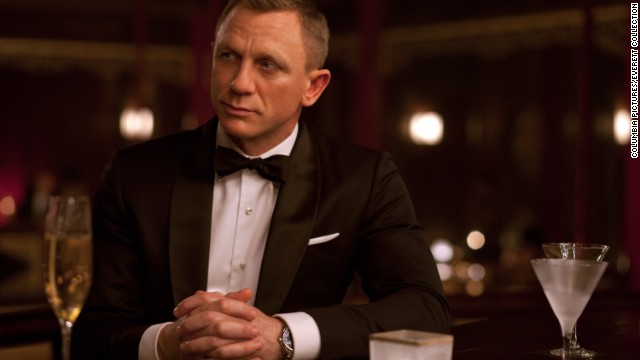
James Bond at risk of early death from alcohol, study says


CNN: "James Bond may want to reconsider his drinking habits, a new study says"
http://www.cnn.com/2013/12/12/health/james-bond-alcohol/

Tongue in cheek and serious at the same time, the article was prompted by an actual academic paper published in the British Medical Journal written by a trio of medical researchers where they tallied up the drinking in Fleming's novels and concluded that James Bond ought to be dead.  Just from drinking that is.

Too bad Bond didn't drink whisky.  [Sheepish Correction (thanks Eric): he drinks a ton of whisky in the books.  In the books Bond drinks a variety, but primarily whisky.  In the movies he regularly prefers vodka martinis, shaken, not stirred.  So it's wrong to say "Bond didn't drink whisky".  Now I'd change it to "Too bad Bond didn't drink whisky thoughtfully."]  While slamming back Vespers seems to be the mode of consumption in the white spirits world; and slamming seems pretty prevalent in the flavored booze, and cocktail worlds too, whisky invites a different kind of drinking (and I'm excluding the doing of shots - which I don't recommend from an epicurean perspective).  Whisky drinkers tend to sip slow and take their time.  This way of drinking whisky - the thoughtful way of true tasting - was enshrined in Jason Debly's manifesto "Slow Whisky Movement".  If you've never read it, take a moment and please read it now and then come back:
http://jason-scotchreviews.blogspot.com/2012/03/slow-whisky-movement.html

Did you catch the gist?  Be Zen.  Cut distractions, truly meditate on the totality of the experience, and know from the get go that you are just having the one dram.  That exclusivity... that monogamy with the dram will make you truly inhabit it.  This manifesto wasn't written with health in mind - but it results in truly affirmative healthy drinking - as well as excellent whisky epicureanism.  ...even if you cheat and end up having two...

That's because moderation is the key to enjoying the benefits of alcohol - if you are going to drink anyway.  This is how the Mayo Clinic article on "Healthy Eating" begins to discuss alcohol consumption:

"It sounds like a mixed message: Drinking alcohol may offer some health benefits, especially for your heart. On the other hand, alcohol may increase your risk of health problems and damage your heart.  So which is it? When it comes to drinking alcohol, the key is doing so only in moderation."
http://www.mayoclinic.com/health/alcohol/SC00024

Today's guest blogger on The Coopered Tot is health writer Claire Gilbert who has taken the time to make a well supported argument for why moderate drinking is good for you.  This is hardly news - but it bears repeating, particularly in light of the more frequent press about how alcohol can kill you.  Make no mistake - the key here is moderate drinking.

Balancing the bad with the good


When taken to excess no one is going to dispute that alcohol in any form can increase the risk of damage to your liver and nervous system. Drinking heavily can also raise your blood pressure, which can cause damage to the blood vessels, increasing the likelihood of heart disease. This habit can equally place you at risk of certain cancers and is also tough on your digestive system. Your immune system doesn’t escape either, as heavy drinking suppresses your immune function so your white blood cells are less likely to fight off infections, which you may be at greater risk of contracting any way if the impact on your decision-making means you take part in more risky activities that leaves you vulnerable to contracting sexually transmitted diseases. However, with your altered judgement this may not be the only thing that you regret, as drinking to excess also makes you more likely to have an accident – particularly if you get behind a wheel – or to get in trouble with the law. However, none of these situations are inevitable when you drink alcohol, as the key is how much you drink. If you’re able to moderate your intake, sensible drinking won’t lead to these problems and you’ll gain a range of benefits from doing so.


Health gains from alcohol


Asked which alcohol if any is good for you and most people will say red wine. However, while red wine has been shown to be advantageous for heart health, any form of alcohol can be beneficial for your circulation and other parts of your body. That means if you prefer whiskey or brandy to wine, you can still reap the benefits of drinking sensibly over the week.

Drinking from middle age onward, when the risks of developing heart disease begin to increase, can protect your heart and blood vessels in a number of ways. Firstly, moderate consumption of alcohol increases the production of HDL cholesterol, the form that carries cholesterol away from the arteries to the liver for removal from the body, which helps to retain a healthy blood flow through the arteries. Then there is the fact that drinking moderately reduces the production of fibrinogen, one of the proteins that promote blood clot formation, thereby decreasing the likelihood of a blockage in one of the blood vessels. Levels of inflammation in the body, insulin resistance (where the body struggles to lower blood sugars) and triglycerides (another type of blood fat) – all risk factors for cardiovascular disease – are also reduced.

A number of other chronic health problems appear to be reduced when you drink sensibly. For instance, one or two alcoholic drinks daily have been found to reduce your risk of diabetes by around 30%, while no benefit was seen in people who don’t drink any alcohol. Similarly, around a measure and a half of spirit each day may help to reduce your likelihood of gallstones by about a third. Far from being detrimental to your mental function, drinking moderate amounts of alcohol has also been shown to protect against dementia. Looking beyond your cognitive function, drinking alcohol may help to promote other aspects of your mental well-being, as it has the ability to lift your mood and reduce stress when taken in measured amounts. What’s more, social benefits gained from drinking with friends, family and co-workers can further help to boost your mental health.


Getting the benefits


With all this talk of moderate drinking, what does that actually mean? Based on the Dietary Guidelines for Americans this translates as up to one alcoholic beverage daily for women and up to two for men. As far as spirits go this is equivalent to 1.5 fluid ounce shot, but if you also like a tipple of something else, for beer, lager and cider this means 12 fluid ounces and for wine 5 fluid ounces. Follow these guidelines and you’ll enjoy more than just a good drink, but good health into the bargain.

- Claire Gilbert.


So - as the Holiday drinking season rolls around, remember to drink your whisky.  But sip it slow
.

Saturday, December 7, 2013

Laphroaig's Younger OBs considered. Cigarette?

Laphroaig is the biggest selling Islay single malt according to Bloomberg (accounting for about 44% of the sales of all the whisky from Islay (!)) and it's not a big mystery why.   It is tremendously smoky and peaty, maritime briney, and yet has beguiling stone fruit flavors and plenty of malty sweetness.  The 10 year old expression is fierce, and yet well balanced, and at around $40 one of the biggest values in the single malt world in the flavor density for the dollar equation.  I encountered it, like a lot of malt whiskey fans, very very early.  In the early 1990s after I had tried Macallan, Glenfiddich, and began tasting the Diageo Classic malts I immediately gravitated towards the compellingly simple and classic label of Laphroaig 10.  You can't begin to explore the world of Scotch Whisky without being either seduced or repelled by Islay - the Hebredian jewel where history, mystery, and peat and sea air come together in a magical array of malt whiskies.  Islay malts all tend to have a maritime influence and most have some peat (even if just by cross contamination) - or a lot of peat.  Laphroaig sets an immediate benchmark and it says it right on the label of the base 10 year old expression:  "The most richly flavored of all spirits".  Older Laphroaigs (the 15, which was the flagship OB until 2009 when it was replaced with the 18) are more estery and have a more elegant and polite peat flavor profile.  The younger ones have a forceful peat that is a polarizing flavor.  Some folks absolutely love it and some folks totally hate it.  The flavors of the peat are less about the smoldering earth, wet hemp, or raging wood fire like you get in other Islay malts.  Instead there's a very special almost spicy aspect to the peat's flavor.   And it was this aspect, I confess, that led me to steer clear of Laphroaigs generally for years.  What the heck is that flavor note?  I tend to describe it as a wet tobacco quality - like a cigarette that the rain put out and which you are now lighting up again.  It's a flavor note that I pretty much only get in young (NAS through 10 year old) Laphroaig.  But that's a whole lot of expressions in their line.

Recently I decided to tour through these expressions to reassess how I feel about the flavors of younger Laphroaig.

If you want to know more about the story of Laphroaig be sure to check out Malt Madness' profile:
http://www.maltmadness.com/whisky/laphroaig.html

A more effusive narrative, richly illustrated with period photography and some of the amazing tales - including the tale of the attempted Laphroaig replica Malt Mill is found here:
http://www.laphroaigcollector.com/history.htm

For photographs of the active distillery you can't do better than to visit Ernst Sheiner's  Gateway to Distilleries page for Laphroaig:
http://www.whisky-distillery.net/www.whisky-distilleries.net/Islay_L-P/Seiten/Laphroaig.html

Disclosure of the origin of the samples tasted:  the bottle of Laphroaig Cask Strength 3rd edition, and samples of Triple Wood 2012 and Cairdeas 2012 were generously provided by  Ryan of JSH&A Public Relations in November of 2012 (over a year ago!).  The bottles of Laphroaig 10, and Cairdeas 2013 are my own property, purchased at Park Avenue Liquors.

Laphroaig 10 (in front) and Cairdeas 2013 Port Finish (behind)

Laphroaig 10 43% abv

Color:  gold

Nose:  Putty, clay, lime, hemp.  Far beneath: distant melon, stone fruits, flowers and honey.

Palate entry is sweetness instantly eclipsed by dark oily peat burn with tobacco and tobacco ash.  Spicy heat and some meaty notes (salami) on the expansion and a long slow fade to ash and dirty malt glow on the finish.  Big rich big dark Islay flavor.  You'll either love it or you'll hate it.

With a few drops of water, there's more putty on the nose although the melon and floral notes (distant to start) seem to disappear.  There is more lemon citrus and sunny sweet on the palate.   Mouth feel is a bit richer too.   I'd say a few drops and 10-15 minutes of integration should be considered mandatory.

****  

An absolute landmark for value in an entry level single malt Scotch whisky.  This is an iconic flavor profile.  That said, I'm not in love with it personally.  The peat comes off as dirtier than I'd like.  I find the unadorned Laphroaig flavor profile not as satisfying as the varieties that gussy it up with some sweetness via some kind of wine finish.  I feel almost guilty saying so.  It's like saying you wish Jimmy Durante had a smaller nose.


Laphroaig 10 Cask Strength 55.3% Batch 3 Jan 2011

Color: Light amber with coppery and golden tints.   Looks like a young bourbon.

Nose: Honeyed quince, apricot, roobios herbal tea, and window putty are the dominant notes.  But the aroma is both big and subtle: Creosote and heather, cardboard and floral meadow.  Fresh unlit Virginia tobacco leaf and river clay.  A harmonious tottering of extreme contradictions of loveliness and ugliness.

Explosive on entry and huge on the palate.   Honeyed and stone fruit preserves sugar sweet melded from the first instant with a fierce radiant lit tobacco smoky-bitter peat with a kiss of library paste.   At mid-palate the expansion brings in stone and red fruits under the dusky thick smoke reek with covers all from first sweet piercing sip through the long aching ashy smoky finish.  At the turn there are sub rosa fruity notes yield to tar and ashes.

Adding a few drops of water adds some hints of stone fruit (nectarine) and whisks of floral perfume to the nose.  These meld to clay and putty to form a classic Laphroaig peaty sweet aroma.

The water thins the palate, gentles the sharp sugars of the opening adds a bit of thickness and honey to the mouth feel, and amps up the already generous spicy heat, but it shelves down the tar and ash in the balance.   More citrus tang and ocean air joins the fierce peat reek and yields a more approachable, more harmonious dram.   Slightly.  Water is recommended but it drinks just fine neat too.  This is a seriously fierce and peaty monster.  A flavor packed dram for the money.   I can see why so many people are wild for this one.

*****

A really delicious example of an Islay Peat Monster.  I've had the opportunity to try other batches (the current one is 5).  They are all good - Batch 5 perhaps best of all.

The bottle and samples shown here were provided by
Ryan of JSH&A Public Relations

Laphroaig Cáirdeas 2012 "Origin: 51.2% abv

From the cut sheet that came with the sample - this useful information about this expression:

Each Càirdeas Origin bottling has been crafted with whisky from the very first Laphroaig Càirdeas barrel, ranging in age from 13 to 21 years and boasting notes of white pepper and purple heather.  This full-bodied whisky has been blended with equal parts of exceptionally unique whisky, intensely matured in small quarter casks for seven years.  Laphroaig Càirdeas produces an extraordinary blend of hazelnut and earthy notes befitting of the 18th milestone.

Color:  Pale gold with amber glints

Nose: Gentle tobacco, earth, sweet grassy heather, meaty animal sweat, and a hint of stone fruit.

Sweet with the sharp pointed grassy malt sweet of a young Islay like Octomore, or Ardbeg 10.  The rich earthy tobacco burn of Laphroiag's characteristic peat attack comes on immediately.   There's juicy sweetness in the mid-palate with tastes of Sauternes, white sultanas, and fruit gums mixing among the ashy tobacco smolder meets anthracite peat reek burn.  It's a simple gastronomic trick, but I'm seduced.

A few drops of water increase both the apparent sweetness and the considerable peat heat.   The mouth feel richens a tad too.   It's almost a wash.

****
almost 5 stars.  A delicious peat monster with some elegance and finesse.


Laphroaig Triple Wood 2012 48%

The cut sheet that came with this expression's sample included these useful details:

Laphroaig® Triple Wood (96 proof) is the result of a distinct triple maturation process in American Oak ex-Bourbon barrels, 19th Century style quarter casks and specially selected European Oak Olorso sherry casks.  The finish reveals the perfect marriage of peat, oak and sherry notes.  Roughly 12,000 bottles have been produced for the U.S. market and will be available at participating retail locations beginning in October 2012.

Color: Light amber

Nose: Virginia tobacco, earthy clay, distant stone fruit, a farm animal's haunch, fresh sawn lumber.
The palate entry and bloom are dominated by lumber with some kiln dried "craft whisky" barrel flavors and tobacco and gentle malty sweet.  With some air and time cherry candy notes play underneath.   The interplay of fruity sweet with hot, darkly bitter peat is lovely.

Titanic ashy finish. 

***

borderline four stars.  This was my least favorite of the group.  The wood management's complexity left me tasting some barrels that didn't do it for me.


Laphroaig Cáirdeas 2013 51.3% abv. Port Wood Finish

Color: An extraordinary light amber and rose wine pink.   Salmon.

Nose: Virginia tobacco again, clay, honey malt, raspberry-cherry compote in a sawn oak box.

The palate is raucous and sweet.   It opens with sweet cereal sugars, berry and citrus tartness, honey and red fruits and then explodes into fiery burning tobacco peat and spirit heat.   The finish brings in grapefuit pith tartness and the fading prickly burn of peat redolent of potter's clay, hemp, salt air, and rock mineral.   It's a classic swimmer (at 51.3% abv it fairly cries out for a drop).   Water adds sweetness to the palate and honeyed richness to the mouth feel.  It also amps up the fruit acids and the dynamics of almost every flavor element.  Water and at least a quarter hour of water integration time are necessary for this whisky to open up and strut its stuff.   It's not elegant.   It's not sophisticated.   Heck, it's not even balanced.   It's a raging peat monster with a lovely fruity sheen added by the port cask portion of the double maturation (the remainder being bourbon barrel). 

****
Rich and big and with some lovely fruits.   I slightly preferred the 2012's more floral presentation, but there's little doubt that the port wine finish's zip and tang and extra sweetness take the Laphroaig flavor signature somewhere interesting.

Conclusions: young Laphroaigs are big aggressively peated flavor bombs.  The quality of the peat has a clear tobacco aspect that is polarizing.   I don't want it all the time - but when I do there is no substitute. What's missing in this review? Laphroaig Quarter Cask.   Introduced in 2004, Quarter Cask - a NAS edition that is younger, aged in more aggressively wood infusing quarter sized casks, is the second largest selling Laphroaig expression, accounting for about 15% of total sales.   I didn't taste it here because I'm not sanguine about the small cask shorter aging period idea.  Maybe I'm making a mistake? If I taste it and find it to be so I'll definitely update this review.

So have I come around to liking the tobacco flavor aspects of the peat in younger Laphroaigs?  Yes I have.  I have come to love it.  Just not all the time...

Note: a similar survey was recently performed by Terry Lozoff at Drink Insider: http://drinkinsider.com/2013/02/laphroaig-triple-wood-cairdeas-10-year-cask-strength/